
Focus Areas
Focus Areas
FICS’ analysis of what is driving the attacks on civic space has led us to focus on exploring four key areas in more depth: counter-terrorism laws and policies, narratives of hate and narratives of hope, unaccountable economic power, and the conditions for effective climate action.
Abuse of security powers, tools, and discourse
 01
01New narratives for better futures
 02
02Unaccountable economic power
 03
03The conditions for effective climate action
 04
04
Abuse of security powers, tools, and discourse
Civic space has been severely constricted over the last two decades as counter-terrorism and national security laws and policies have proliferated. Governments have been able to cynically exploit ‘keeping people safe’ to crackdown on rights to assemble, to organise and to protest. We believe it can be disrupted.
Civic Futures, FICS’ flagship philanthropic initiative, launched with founding partners the Fund for Global Human Rights, is a ground-breaking opportunity for funders to collaborate at scale to seed a global, cross-sector civil society response to the widespread abuse of counterterrorism and security laws and technological tools to stifle protest and dissent.
Through Civic Futures, FICS is working with those on the frontline of this repression and those working to change systems at transnational level, investing in new research and analysis to understand in detail how a security playbook of tactics are being combined to criminalize, monitor, and delegitimize movements. We’re committed to building the field at the intersection of civic space and security, but we currently don’t make unsolicited grants through Civic Futures and we will publish on our website and in our newsletter if we have calls for proposals.
- 02
- 03
See all Liverpool street station in the UK at rush hour (Source: Keith Gentry / Shutterstock) Nov 2025 - Article ToolA new, in-depth resource that examines global counter-terrorism and security networks published by Statewatch.Ocean Rebellion action in London, UK (Source: Crispin Hughes/Panos Pictures)
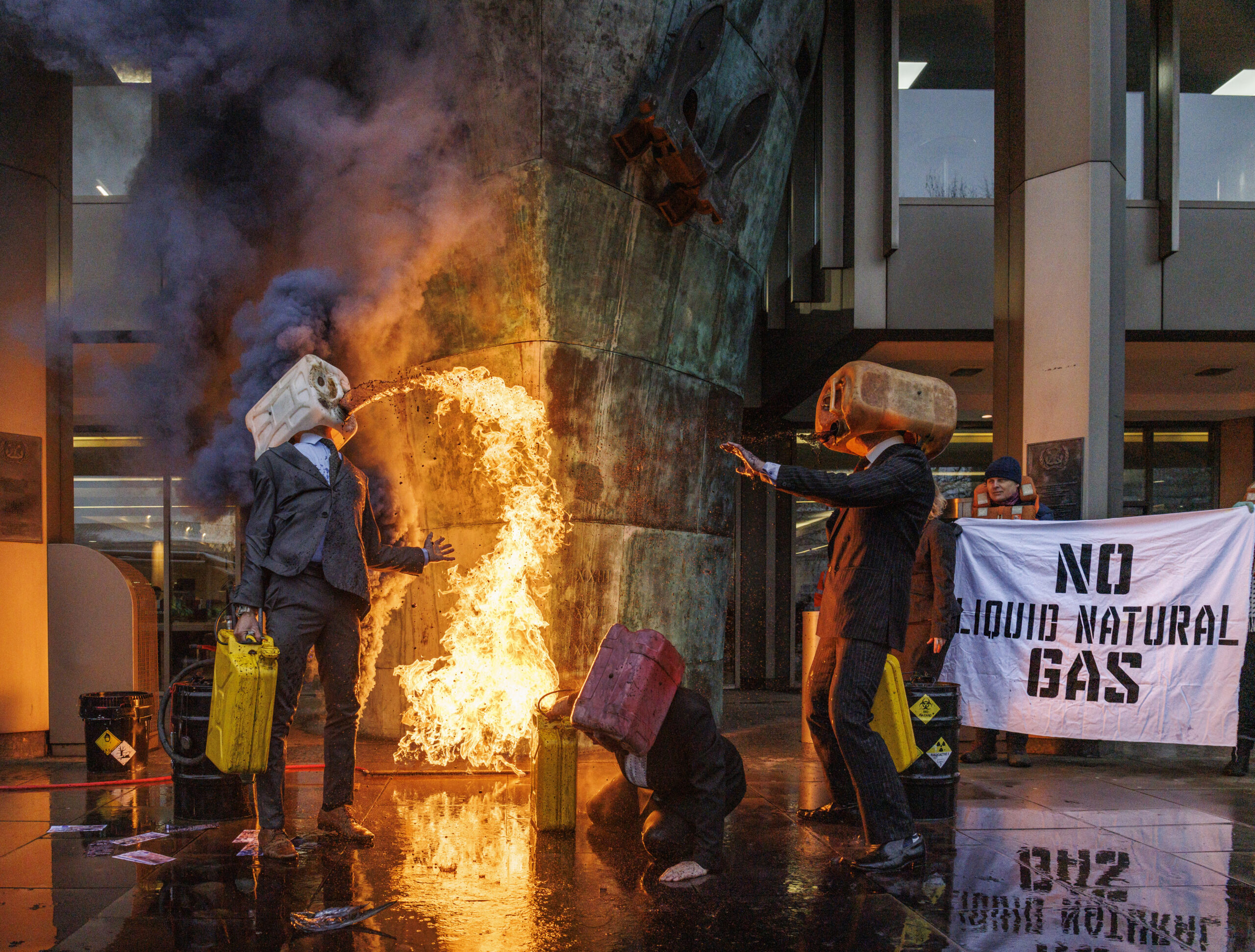 Jan 2025 - ReportAs the climate emergency escalates, so are efforts to securitize climate change.Demonstrators at slavery memorial march in Berlin, Germany (Source: Stefan Boness/Panos Pictures)
 Jun 2023 - Report ToolBuilding on Rethinking Civic Space, the major review published by FICS in 2020, this month we released The ...
New narratives for better futures
In a world beset with economic and environmental fragility, fear-driven narratives and anti-rights agitators are making enormous gains in many countries. Narratives are collections of stories connected by common values and shared through multiple channels, through repetition they influence what societies consider to be ‘common sense’. Around the world, fear-driven narratives are used to normalise restrictions on civic space and justify attacks on rights-based movements.
Yet, learning how to use narratives strategically is a powerful tool to challenge harmful norms and help alternative ideas to gain traction. FICS uses its position within philanthropy to advocate for and broker new resourcing across the narratives ecosystem.
Between 2021-2026, FICS incubated the Global Narrative Hive, a new network working to connect and grow the global ecosystem of activists and campaigners, communications workers, researchers, artists, journalists and others who are using narratives to advance their visions of a more just world. We supported the Hive as part of our commitment to supporting rights-based movements to defend their civic space and share better visions of the future.- 01
- 03
See all Source: Shutterstock, Merania, Street Artist Feb 2026 - ReportNew European Democracy Hub report highlighting new approaches to defending global civil society features FICS analysis on narrative ...Pulling ropes at Day of the Dead Festival, Guatemala (Source: James Rodriguez/Panos Pictures)
 Mar 2025 - ReportWe are proud to share the Hive’s report from this experimental round of grants: Countering extreme right narratives ...Pride flag at parade in Stuttgart, Germany (Source: Raphael Renter / Unsplash)
 Apr 2024 - ReportIn September 2023 Canada's International Development Research Centre (IDRC) commissioned FICS to map existing research on discrimination, xenophobia ...
Unaccountable economic power
In 'Rethinking Civic Space' FICS found that increasingly concentrated economic power is a direct driver of shrinking civic space. Multinational companies and super wealthy individuals are not simply hoarding resources, but are buying access to government. They profit from the repression of civic space, and position themselves as go-to partners for government in place of civil society actors.
In 2024, FICS commissioned new analysis resulting in a briefing note and framework exploring entry points for funders seeking to disrupt or transform the ways concentrated economic power impacts civic space. Our analysis informs the work of funders working in the corporate capture and corporate accountability space and others whose grant-making is impacted by these issues. If this applies to you, please get in touch.- 01
- 02
See all Wind turbines, 2023 (Source: Unsplash | Casey Horner) Sep 2026 - ReportThe first in FICS' Shifting the Momentum series for climate philanthropy: a primer setting out how shrinking civic space ...Students gather in climate protest in Sydney, Australia (Source: Holli/Shutterstock)
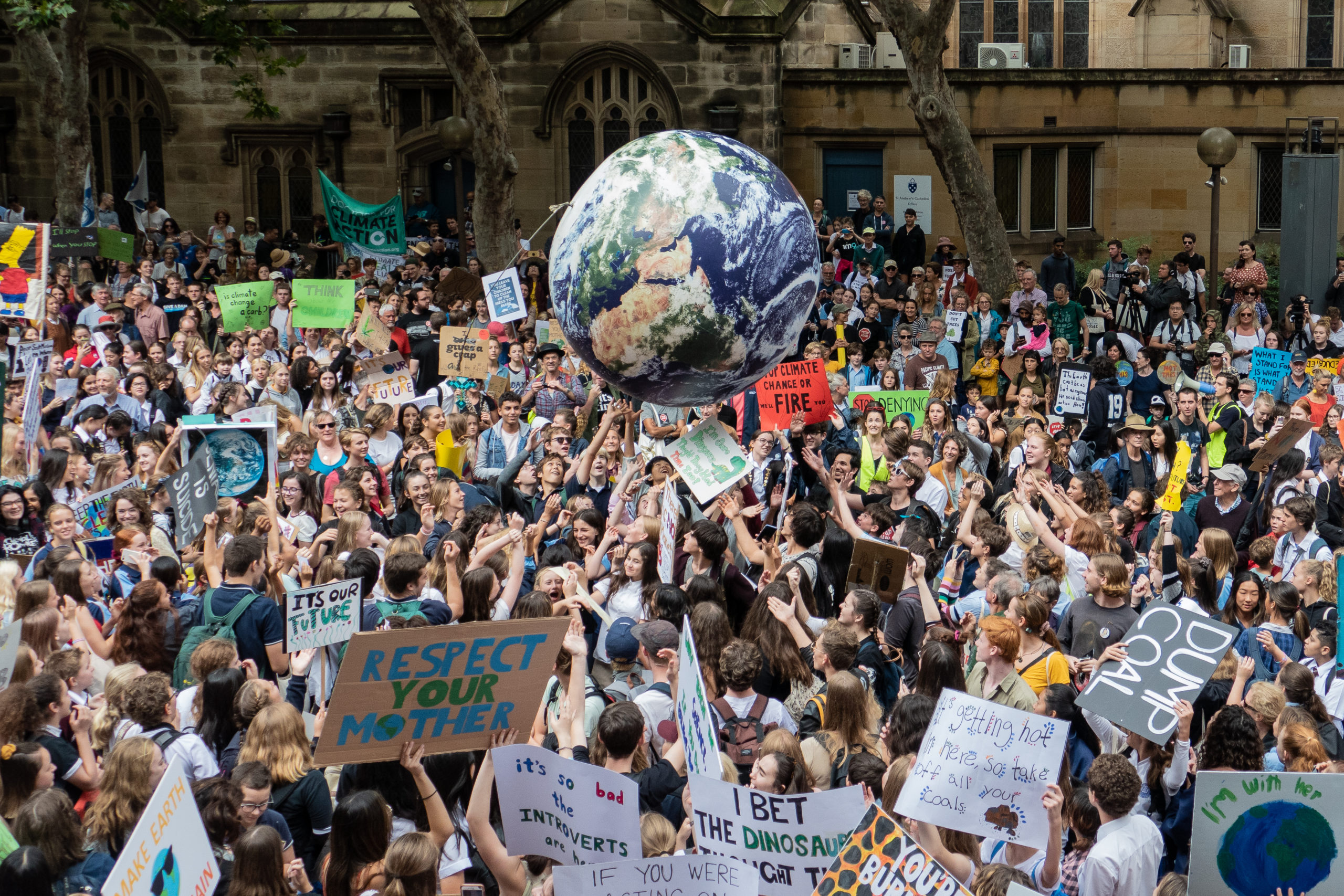 May 2020 - ReportAuthors Ben Hayes and Poonam Joshi summarise the key findings of the FICS 2019 strategic review, which sought ...Source: Shutterstock, Merania, Street ArtistApr 2024 - Article ToolIntroducing the playbook for expanding civic space - a conversation tool to help funders and civil society identify ...
The conditions for effective climate action
The reduction of greenhouse gas emissions – through transition to clean and renewable energy, preservation of forests, transformation of our food and agriculture systems, and other strategies – relies on our broad rights to influence policy and practice by speaking, participating, and organising freely.
Climate donors are concerned that these rights are being limited, through abuse of legal and regulatory schemes on cross-border funding, administrative harassment, criminalization, defamation, disinformation, SLAPP suits, surveillance, and violence and killings.
A broad swath of the climate field is being targeted, including academics, affected communities, campaigners, intermediary and private philanthropies, lawyers, policy experts, scientists, and social impact entrepreneurs. Without the space to advocate and operate, progress on climate goals stalls or reverses, making closing civic space a fundamental issue for all working toward a safe, healthy climate.
For the past several years, FICS has been working to broaden the landscape of funders who champion and prioritise bold strategies to keep civic space open for effective climate action. From September 2026, we have begun publishing the Shifting the Momentum series of briefings for climate philanthropy – highlighting entry points for philanthropy to counter these barriers, the strategies employed by peer donors, and excellent work being done across the globe.See all Wind turbines, 2023 (Source: Unsplash | Casey Horner)Sep 2026 - ReportThe first in FICS' Shifting the Momentum series for climate philanthropy: a primer setting out how shrinking civic space ...Ocean Rebellion action in London, UK (Source: Crispin Hughes/Panos Pictures)Jan 2025 - ReportAs the climate emergency escalates, so are efforts to securitize climate change.Students gather in climate protest in Sydney, Australia (Source: Holli/Shutterstock)May 2020 - ReportAuthors Ben Hayes and Poonam Joshi summarise the key findings of the FICS 2019 strategic review, which sought ...
News & Resources
Wind turbines, 2023 (Source: Unsplash | Casey Horner)
Sep 2026 -
Report
The first in FICS' Shifting the Momentum series for climate philanthropy: a primer setting out how shrinking civic space ...
Demonstration against the far right, Germany 2024 (Source: Stefan Boness / Panos)

May 2026 -
News
The Global Narrative Hive becomes independent from FICS
Source: Shutterstock, Merania, Street Artist
Feb 2026 -
Report
New European Democracy Hub report highlighting new approaches to defending global civil society features FICS analysis on narrative ...